Discover expert articles on AI, SaaS, software, marketing, SEO, affiliate marketing and startup growth.
Discover expert articles on AI, SaaS, software, marketing, SEO, affiliate marketing and startup growth.
By LoyAnn Sherwood
Published on Apr 18, 2026

Something changed in blogging over the last two years, and most advice has not caught up with it. Readers no longer always arrive by clicking a blue link. They ask ChatGPT, Perplexity or Google's AI Mode a question, get a synthesised answer, and only click through when they want more. Your blog is now competing to be the source an AI engine cites, not just the page a human scrolls to.
That single shift drives almost everything else on this list. The trends below are the ones with real consequences for how you plan, write and publish this year — not a roundup of everything anyone has ever called a trend.
| Trend | What changed | What to do about it |
|---|---|---|
| AI search citations | Answers are synthesised from sources; being cited matters as much as ranking | Write self-contained factual statements AI can lift |
| Experience over information | Google rewards first-hand experience; AI cannot fabricate it | Publish what you personally tested, used or measured |
| Depth beats volume | Thin posts published at pace now actively hurt a site | Fewer, deeper articles on a focused topic |
| Format diversity | Video, audio and interactive elements raise engagement | Add one non-text format where it genuinely helps |
| Accessibility and speed | Core Web Vitals and WCAG affect both ranking and reach | Fix speed and contrast before writing more posts |
| Hyper-niche focus | Broad topics are saturated; specific ones still rank | Narrow the subject, not the effort |
Read the table this way: the first two rows are the structural changes. The rest are long-running trends that got more important because of them.
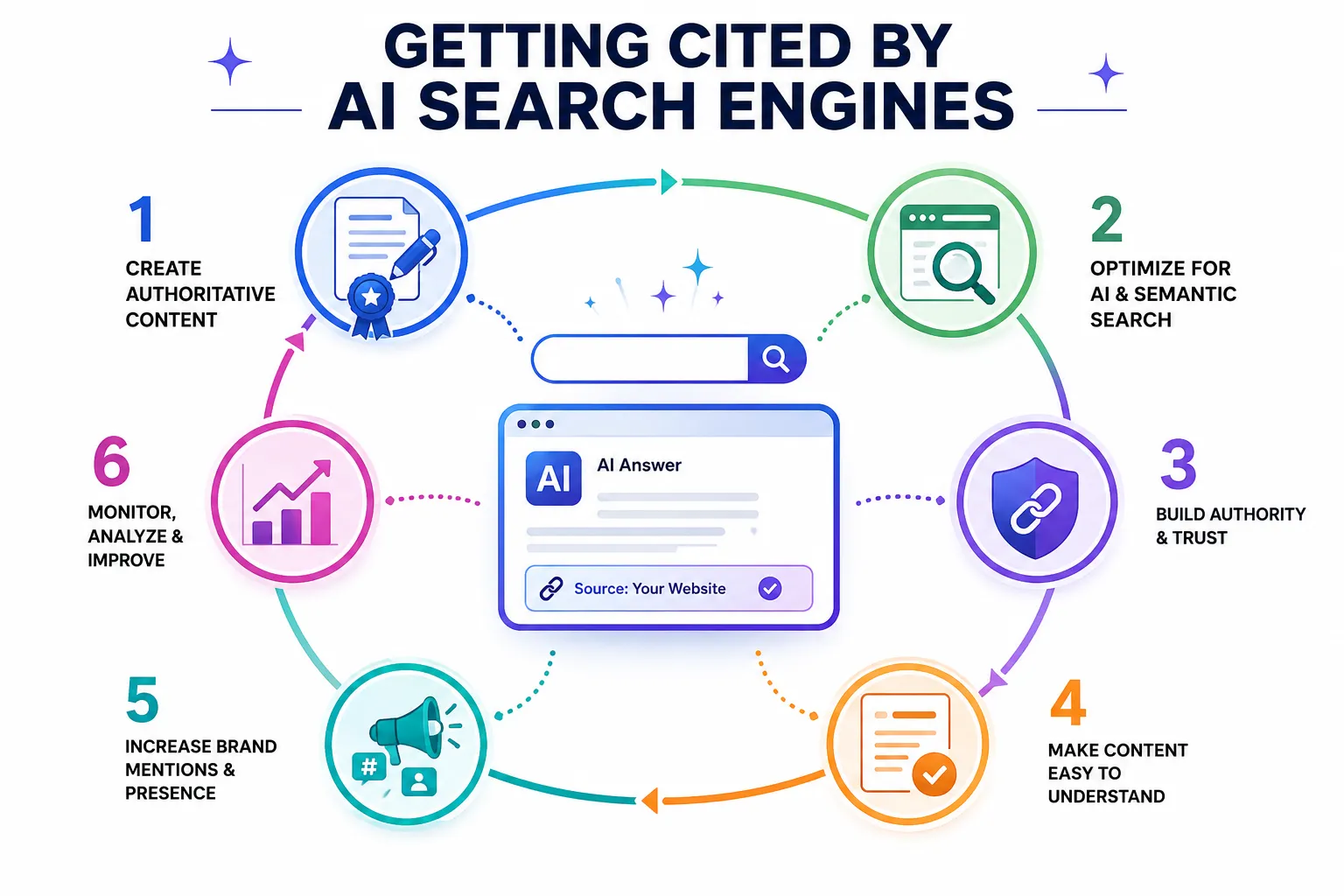
This is the genuinely new trend of 2026, and it works differently from traditional SEO.
When someone asks an AI engine a question, the engine reads a set of sources and writes an answer from them, usually citing a handful. Being cited puts your brand in front of the reader even when they never visit your site — and when they do click, they arrive already half-convinced. Being absent means being invisible in that entire channel.
One honest catch: there is no submission process for AI engines. You cannot ask ChatGPT or Perplexity to recrawl you the way you can request indexing in Search Console. They pick content up on their own schedule, which means this is a slow, compounding play rather than a switch you flip.
Google's helpful content guidance is explicit that content should be written by people with first-hand experience of the subject. That guidance existed before generative AI was widespread. It matters far more now, because first-hand experience is the one thing a language model cannot manufacture.
An AI can summarise every published review of a tool. It cannot tell you that the export broke on a 400-row file, or that support replied in six hours on a Sunday. That gap is where human blogs still win outright.
For years the advice was to publish consistently and let volume compound. In 2026 that advice is actively dangerous if the volume is thin.
Sites that scaled up output with lightly-edited generated content have seen exactly the opposite of what they expected: not just poor performance for the new pages, but drops in visibility across pages that used to do fine. Search systems increasingly assess quality at the site level, so weak pages can drag down strong ones sitting beside them.
The practical version: one genuinely useful article a month beats eight thin ones. If you already have thin posts published, improving or removing them is usually higher-value work than adding anything new. Our guide to using analytics to find underperforming posts covers how to work out which ones to deal with first.
Text-only posts are no longer the default. Video, audio and interactive elements all measurably increase how long people stay on a page, and time on page feeds back into how search systems judge whether a page satisfied the visitor.
Embedded video works best when it demonstrates something text struggles to explain — a workflow, an interface, a physical process. A talking-head video restating the article adds load time without adding value.
Audio versions of posts serve commuters and multitaskers, and the transcript gives you additional indexable text. The honest catch is production time: an audio version of every post is rarely sustainable for a small team.
Calculators, quizzes and comparison tools generate strong engagement and tend to attract links naturally. They also need building and maintaining, which puts them out of reach for many blogs — worth doing once, well, on your most important page rather than everywhere.
The caveat that matters: every embedded element costs load speed, and speed is itself a ranking and usability factor. Adding media to a slow page can leave you worse off than before.
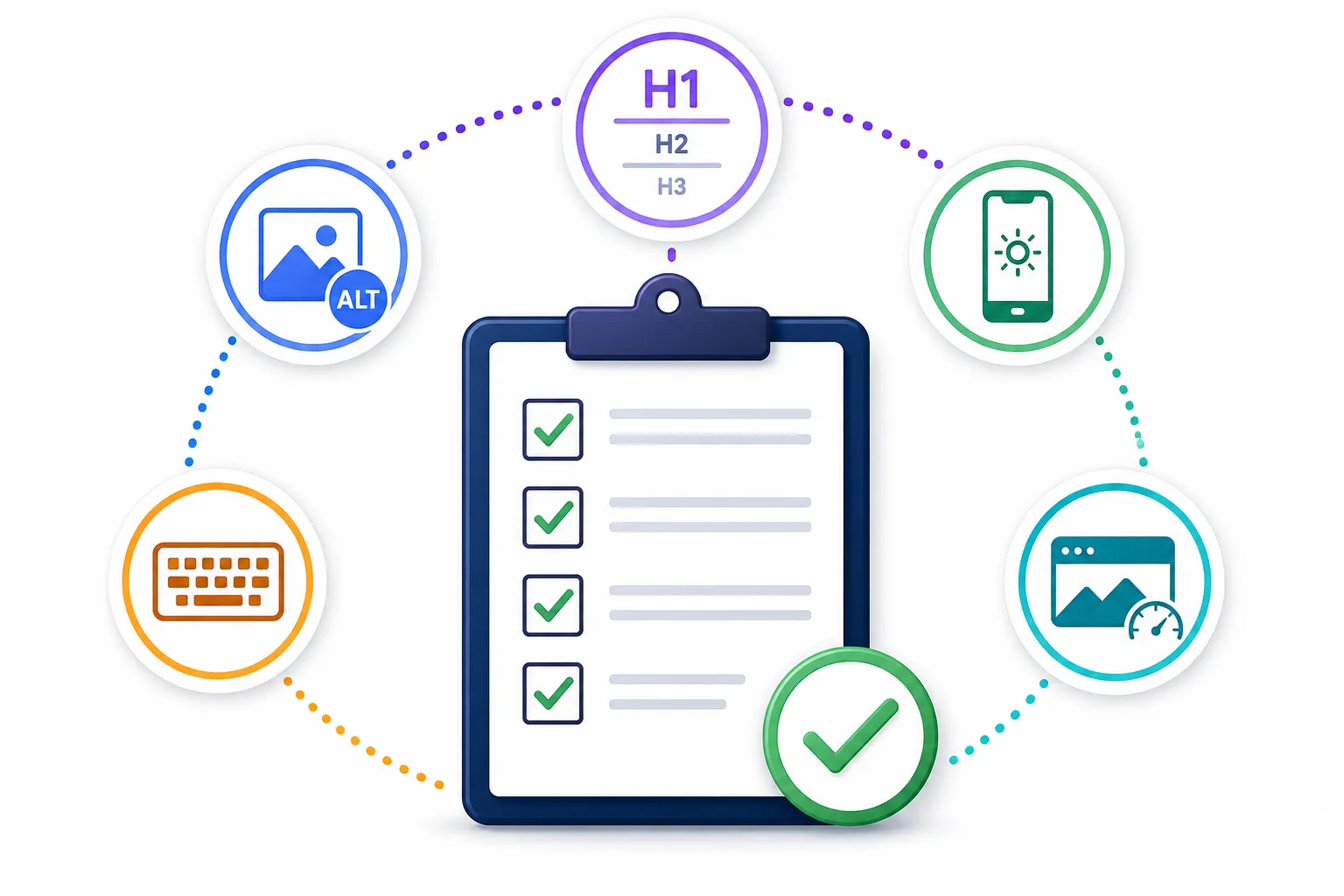
Google's Core Web Vitals measure loading, interactivity and visual stability, and they influence rankings directly. Separately, the WCAG accessibility guidelines define what makes content usable for people with disabilities — a group large enough that ignoring them costs real readers before it costs any ranking.
The two overlap more than people expect. Proper heading hierarchy helps screen readers and helps search engines parse your structure. Descriptive alt text serves blind readers and gives image search something to work with. Good colour contrast helps low-vision readers and everyone reading on a phone in sunlight.
This trend predates AI search and survived it, which is the best evidence that it is real rather than fashionable.
Broad topics are saturated by sites with more authority than a growing blog can match. Narrow topics are not. “Blogging tips” is unwinnable. “Blogging tips for physiotherapists starting a practice” is winnable, and it attracts readers who actually convert because the fit is exact.
Narrowing works better still when the articles connect. A cluster of related posts that link to each other signals genuine subject depth to both search engines and AI systems. If you are choosing where to publish, our list of the top 100 blogging platforms is a useful starting point, and the beginner's guide to blogging covers the setup decisions that come before any of this.
Trend lists rarely tell you what not to do, which makes them longer but less useful. Three things are safe to skip:
Ordered by return on effort, highest first:
Get first access to exclusive software reviews, hand-picked SaaS lifetime deals, and digital growth strategies delivered straight to your inbox. No spam, ever—just pure software value to scale your business.
60 subscribers have joined!
If you love lifetime SaaS deals as much as I do, then please subscribe to our monthly/weekly AppLuxe newsletter.
Marcus Vance, SaaS Specialist
If monetisation is the goal behind the traffic, our guide to monetising a blog covers what to do once the visitors arrive, and the software deals directory is a practical place to find the tools mentioned throughout this article.
Broad topics are getting harder to stand out in. The trend is firmly in the direction of drilling down into extremely specific niches.
Instead of blogging about “cooking,” consider “vegan gluten-free baking for busy parents.” This level of specificity helps you attract a highly targeted audience who are genuinely interested in what you have to say. It also makes it easier to establish yourself as an authority in that particular area.
It’s not just about what you want to write, but what your audience needs to know. Analyzing search intent – understanding why someone is searching for a particular term – is crucial. Are they looking for information, a solution to a problem, or to make a purchase? Tailoring your content to match that intent makes it far more valuable.
A niche audience, by its nature, often feels more connected. Fostering this connection through comments, forums, or even dedicated social media groups transforms passive readers into an active community. This cultivates loyalty and a sense of belonging, which is invaluable for a blog’s long-term health. Think about creating spaces where readers can interact with each other as well as with you.

A fantastic blog post can be undermined by a poor user experience. This year, UX and accessibility aren’t just nice-to-haves; they’re essential.
Nobody likes waiting for a page to load. Google certainly doesn’t. Optimizing your site for speed – compressing images, using efficient hosting, minimizing code – is no longer optional. A fast website dramatically improves user experience and can positively impact your search rankings.
Most people access the internet on their phones. Your blog must look and function perfectly on mobile devices. This isn’t about having a “responsive” site; it’s about designing with the mobile user in mind from the very beginning. Text should be easy to read, buttons easy to tap, and layout clean and uncluttered on a smaller screen.
Making your blog accessible means ensuring it can be used by people with disabilities. This includes things like proper alt text for images, clear headings, appropriate color contrast, and keyboard navigation. Beyond being the right thing to do, it also expands your potential audience and can improve search engine optimization. It’s about ensuring your content is available to as many people as possible, regardless of their individual circumstances or the assistive technologies they might employ.
I would like to Submit Guest Post on your website.

In an age of information overload and often dubious sourcing, authenticity and trust are more important than ever. Readers are looking for genuine voices.
Your unique perspective, experiences, and voice are what differentiate you. Don’t be afraid to let your personality shine through. Blogs are inherently personal platforms, and leveraging your personal brand helps create a stronger connection with your audience. People connect with people, not just faceless content.
Being upfront about your sources, disclosing affiliate relationships, and admitting when you don’t have all the answers builds trust. If you make a mistake, own it. This level of transparency fosters credibility and shows respect for your readers, proving you value their intelligence and time.
Google’s E-A-T guidelines are a strong signal that quality and reputation matter. Demonstrate your expertise through well-researched content, citing reputable sources, and showcasing your experience. Build authoritativeness by being recognized in your field, and cultivate trustworthiness through accuracy, ethical practices, and clear communication. These elements are key for both human readers and search engines.
As the digital landscape continues to evolve, staying updated on the latest blogging trends is essential for content creators looking to enhance their online presence. One insightful resource that delves into effective strategies for bloggers is an article that offers valuable tips for maximizing your blogging potential. By exploring these recommendations, you can discover innovative ways to engage your audience and improve your blog’s performance. For more information, check out this helpful guide on maximizing your blogging potential.
| Year | Number of Blogs | Percentage of Video Blogs | Average Blog Post Length |
|---|---|---|---|
| 2015 | 152 million | 12% | 800 words |
| 2016 | 172 million | 18% | 900 words |
| 2017 | 192 million | 25% | 950 words |
| 2018 | 212 million | 30% | 1000 words |
As blogging continues to evolve, the ethical responsibilities of content creators are also coming into sharper focus. It’s about being a good digital citizen.
With increasing awareness around personal data, bloggers need to be diligent about privacy. This includes having a clear privacy policy, understanding data collection practices (especially if you use analytics or third-party tools), and ensuring your site is secure (SSL certificate is a baseline requirement). Transparency about how you handle reader data is paramount.
As content creators, we have a responsibility to share accurate information. Fact-checking, citing credible sources, and avoiding sensationalism or clickbait are vital. In an online environment often saturated with false or misleading content, being a reliable source distinguishes quality blogs.
This refers to creating content in a way that is mindful of the environmental impact (digital footprint, energy consumption of servers) and also sustainable for the blogger themselves. Avoiding burnout by setting realistic goals, repurposing content intelligently, and focusing on evergreen pieces can contribute to a more sustainable blogging practice. It’s about longevity and not just chasing fleeting trends, while also being mindful of the broader impact of your digital presence. This also means being mindful of the content you put out and the message it sends, ensuring it promotes positive interactions and ideas.
The blogs that do well in 2026 are not the ones publishing most. They are the ones publishing things only they could have written, structured so both people and machines can use them. That is a slower approach than the volume playbook, and it holds up far better.
If you build software and want to reach an audience actively researching tools and tactics like these, you can advertise on Appluxe.
Paste this JSON-LD block into the page HTML, before the closing </body> tag. The page already has BlogPosting, Organization, WebSite and BreadcrumbList schema — this adds the FAQPage type, which is currently missing. See Google's FAQPage documentation. If the FAQ copy is edited, update this block to match or the schema becomes invalid.


LoyAnn Sherwood is the CEO and Founder of AppLuxe. She spent approximately 25 years in the healthcare industry before transitioning to digital entrepreneurship. Sherwood founded AppLuxe in 2026 after acquiring the domain and identifying an opportunity to build a luxury-positioned app and software marketplace. She manages the platform's editorial direction and business development strategy.
Get first access to exclusive software reviews, hand-picked SaaS lifetime deals, and digital growth strategies delivered straight to your inbox. No spam, ever—just pure software value to scale your business.
60 subscribers have joined!
If you love lifetime SaaS deals as much as I do, then please subscribe to our monthly/weekly AppLuxe newsletter.
Marcus Vance, SaaS Specialist