Discover expert articles on AI, SaaS, software, marketing, SEO, affiliate marketing and startup growth.
Discover expert articles on AI, SaaS, software, marketing, SEO, affiliate marketing and startup growth.
By LoyAnn Sherwood
Published on Jul 20, 2026
Somewhere between the Series A pitch deck and the board meeting, most SaaS founders learn the same uncomfortable lesson: growth is easy to buy and hard to afford. Customer acquisition cost (CAC) has climbed roughly 60% over the past five years and more than 220% over the past eight, driven by pricier ad auctions, longer B2B sales cycles, and a market that's simply more crowded than it was in 2018.
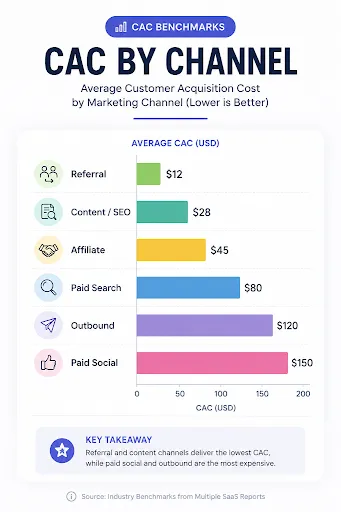
The number that should worry you isn't your total marketing spend — it's what you're paying per customer, broken down by channel. A blended CAC of $700 sounds manageable until you realize $200 of it came from a referral program and $2,400 of it came from LinkedIn ads that barely broke even. Most SaaS teams never see that split. This article breaks it down using the latest 2026 benchmark data, then walks through the channels — including a few underrated ones — that are actually keeping CAC sane for software companies right now.
The formula is simple on paper: add up your fully-loaded sales and marketing spend for a period — salaries, ad spend, tools, content production, events — and divide by the number of new customers you closed in that same window. Most founders undercount it by looking only at ad spend and ignoring the sales team salaries and content costs baked into every closed deal.
The more useful distinction is blended CAC vs. paid CAC. Blended CAC includes every new customer, whether they came from a Google ad or a friend's recommendation. Paid CAC only counts customers who arrived through paid channels. Industry data puts the ratio of paid CAC to blended CAC at roughly 2.4x to 3.1x, which means somewhere between 60% and 70% of the average SaaS company's new customers are arriving through channels nobody is paying directly for — organic search, referrals, word of mouth, and earned media.
CAC benchmarks are close to meaningless without segmenting by go-to-market motion. A self-serve product and an enterprise sales team are not playing the same game, and comparing their CAC directly tells you nothing useful.
| Segment | Typical CAC Range (2026) | Notes |
|---|---|---|
| Self-serve / PLG | Under $500 | Freemium and free-trial funnels, minimal sales-team involvement |
| SMB (sales-assisted) | $200–$700 | Short cycles, transactional deals |
| Mid-market | $1,200–$2,000 | Consultative selling, longer cycles |
| Enterprise (sales-led) | $5,000–$250,000+ | Multiple stakeholders, procurement, long cycles |
The gap between self-serve and enterprise motions is enormous — median CAC for a self-serve product sits around $700 versus roughly $11,400 for a sales-led enterprise deal, a spread of more than 16x driven almost entirely by the human cost of enterprise selling. Vertical matters too: fintech SaaS regularly posts some of the highest CAC in the industry because of regulatory complexity and long procurement cycles, while e-commerce-adjacent SaaS tools tend to sit near the bottom of the range because the ROI story sells itself faster.
This is the part most CAC articles skip, and it's the part that actually changes how you allocate budget.
| Channel | Typical CAC | Why |
|---|---|---|
| Referral / partner programs | ~$141–$200 | Warm intros, pre-qualified leads |
| Organic content / SEO | ~$480–$1,500 | High upfront cost, compounds over time |
| Affiliate marketing | Varies (commission-based) | Performance-only spend, no upfront risk |
| Paid search (B2B) | ~$800 avg. | Rising CPCs, immediate but expensive |
| Outbound sales | ~$1,980 | SDR time, tooling, long ramp |
| Paid social (LinkedIn) | $2,000+ | Highest-cost channel in most stacks |
| Events | $400–$500 | High-touch, works best for enterprise |
Referral and partner-driven channels consistently post the lowest CAC in every dataset available, largely because the "sales" work is being done by a trusted third party before your team ever gets involved. That's not a coincidence — it's the same logic behind three channels that deserve more attention than they usually get.
Our guide to guest posting for backlinks is a good starting point. Organic content has a higher upfront CAC than paid channels but a fundamentally different cost curve — it depreciates slowly instead of shutting off the moment you stop paying. Backlinks remain one of Google's strongest ranking signals, and pages ranking #1 in competitive SERPs tend to carry nearly four times more referring links than the pages below them.
Guest posting specifically is having a strange moment: nearly half of SaaS companies still use it as a core link-building tactic, and B2B SaaS SEO overall delivers some of the highest ROI of any acquisition channel when measured over 12+ months. But the data also shows a real shift — when SEO practitioners are asked which tactic moves rankings fastest, digital PR now beats traditional guest posting by roughly a 3:1 margin. The honest read: guest posting isn't dead, but the "50 low-quality placements" version of it is. One editorial placement on a relevant, real-traffic publication now outperforms dozens of thin ones, and posts with backlinks placed inside the actual content generate substantially more referral traffic than a bio-only link ever will.
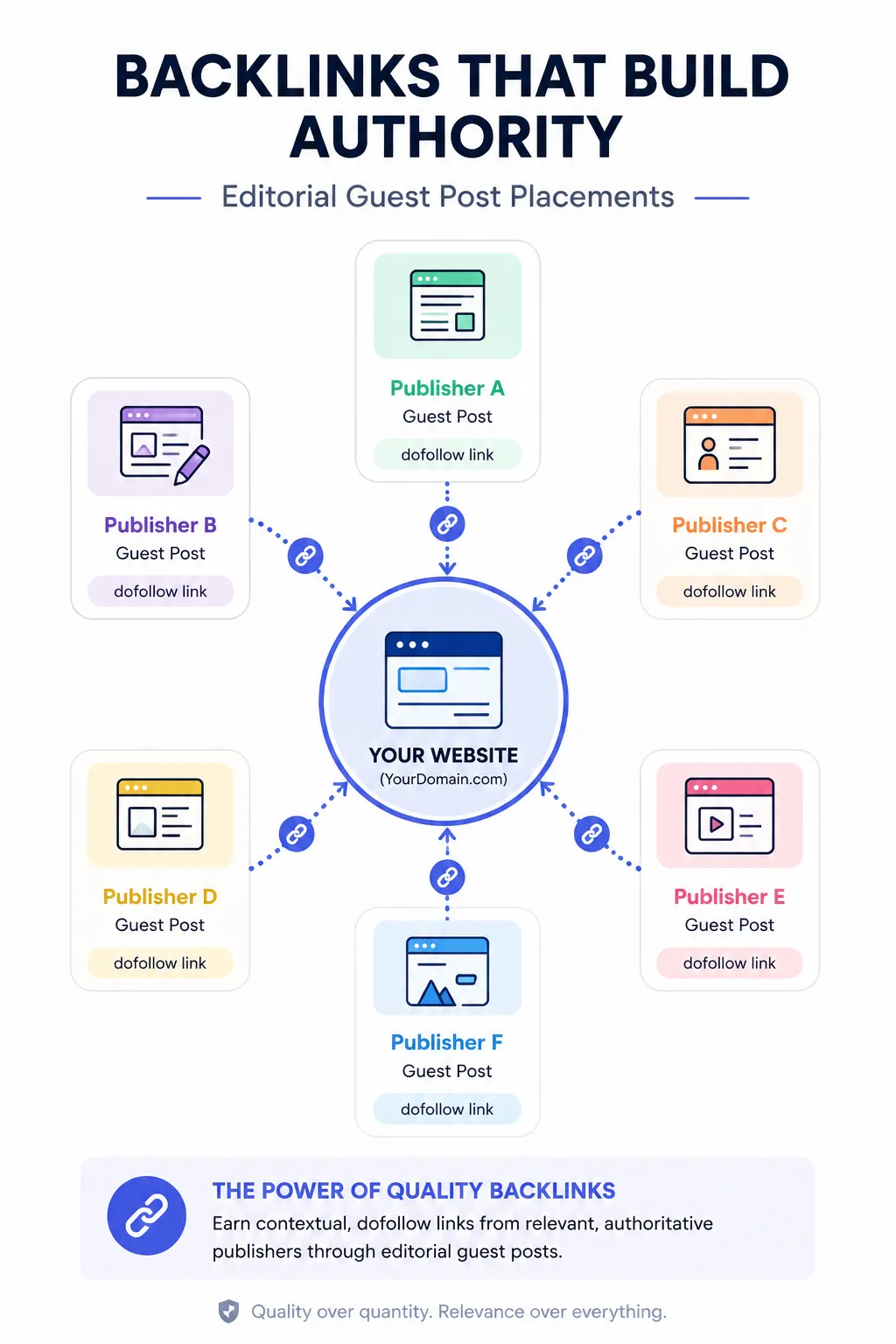
Alt text: "Diagram illustrating how editorial guest post backlinks connect to a SaaS company's website."
Affiliate marketing has quietly become one of the better-kept secrets in SaaS growth, mostly because it's structurally low-risk: you only pay when a customer actually converts. Median SaaS affiliate commissions now sit around 22.5% of first-year revenue — well above the roughly 8% typical in e-commerce — because software margins can support it. Programs that reach maturity report affiliate-sourced revenue contributing anywhere from 15% to 25% of monthly recurring revenue, and global affiliate spend is projected to approach $19–20 billion in 2026, with SaaS as one of the fastest-growing categories inside that number.
The mechanism is the same one that makes referrals cheap: affiliates are already-trusted voices doing the persuasion work before a prospect ever lands on your pricing page. For a full breakdown of how to structure commissions, recruit partners, and avoid the common program mistakes, see our deep dive on app-saas-affiliate-marketing-how-to-scale-software-revenue" scaling SaaS revenue through affiliate marketing.
App marketplaces — think platform-native directories tied to tools your customers already use — are one of the most underrated acquisition channels precisely because they front-load trust. A listing inside an established marketplace puts your product in front of an audience that's already mid-purchase-decision, already vetted by the platform, and already primed to install rather than research. It's a fundamentally different funnel than cold traffic, and CAC reflects that. If you haven't evaluated this channel yet, our what-is-an-app-marketplace-complete-beginners-guide-2026" walks through how they work and how to get listed.
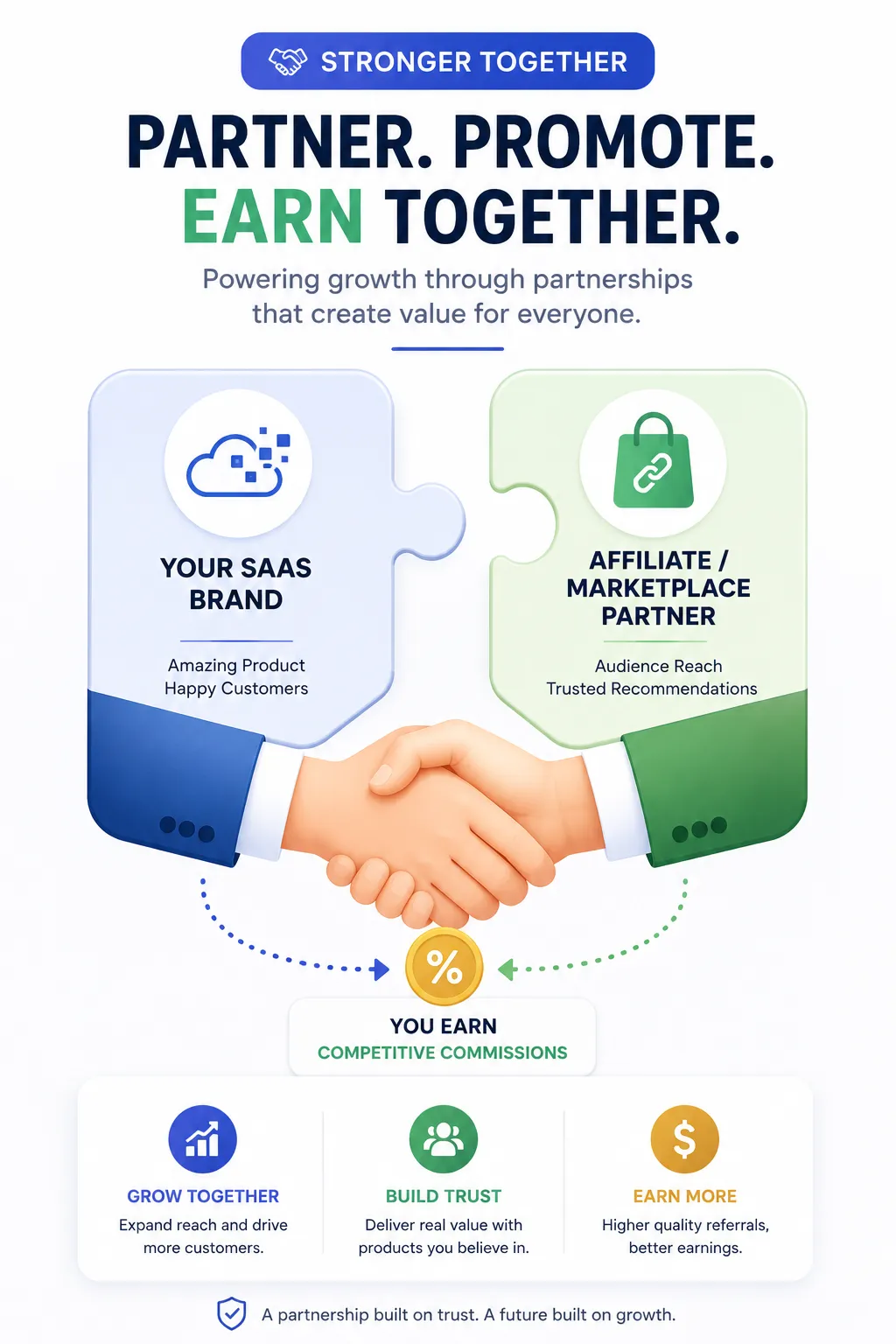
Alt text: "Illustration representing a SaaS affiliate or marketplace partnership driving customer referrals."
A low CAC in isolation doesn't tell you much. What matters is the relationship between CAC and customer lifetime value (LTV). The standard healthy benchmark is an LTV:CAC ratio of at least 3:1, with many investors now expecting 4:1 or higher at the cohort level — not just as a blended, company-wide average that can hide a bad recent quarter. A ratio sitting at or below 2:1 is generally treated as a warning sign that your growth engine is burning more than it's returning.
The second number to track alongside it is CAC payback period — how many months of revenue it takes to recover what you spent acquiring a customer. Efficient SaaS motions keep this under 12 months. Push much past 18, and you're carrying a lot of cash risk on customers who could still churn before they've paid back what they cost.
A few forces are compounding at once: Google and LinkedIn ad costs have both risen sharply since 2019, B2B sales cycles have lengthened as buyers add more stakeholders per deal, and privacy changes have made attribution murkier, which inflates reported CAC even when real costs haven't moved as much.
The counter-trend worth watching is AI-assisted acquisition. Companies using AI for lead scoring, ad creative testing, and personalized campaign targeting are reporting CAC reductions in the 30–47% range compared to teams still running fully manual funnels. That's not a niche tactic anymore — it's rapidly becoming table stakes, and the gap between AI-adopters and laggards is now a bigger CAC differentiator than the channel mix itself.
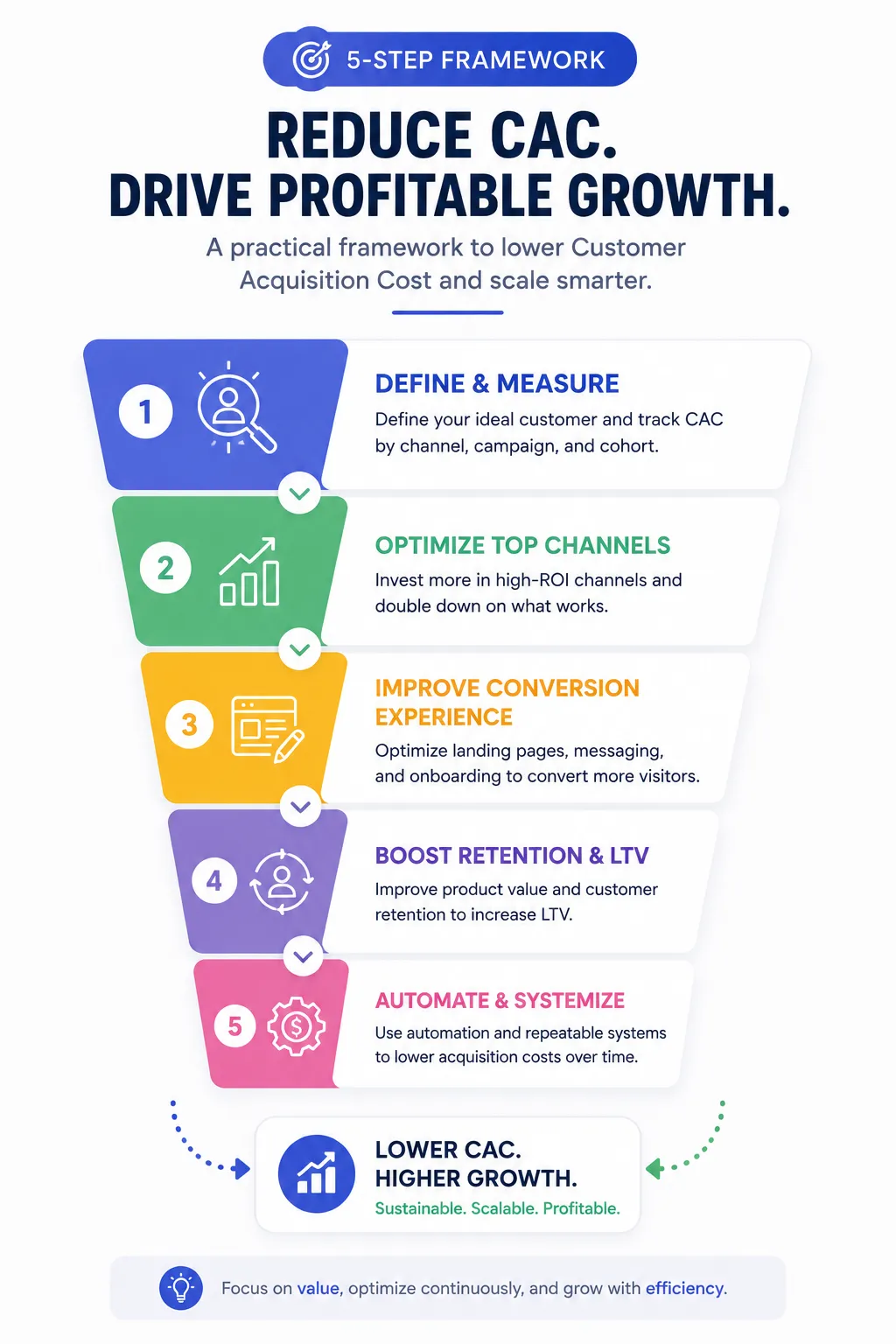
Alt text: "Five-step checklist for lowering SaaS customer acquisition cost without slowing growth."
Get first access to exclusive software reviews, hand-picked SaaS lifetime deals, and digital growth strategies delivered straight to your inbox. No spam, ever—just pure software value to scale your business.
55 subscribers have joined!
If you love lifetime SaaS deals as much as I do, then please subscribe to our monthly/weekly AppLuxe newsletter.
Marcus Vance, SaaS Specialist
CAC will keep rising industry-wide through 2026 and likely beyond. The companies pulling ahead aren't the ones spending less — they're the ones who know exactly which dollar is buying which customer, and who've built at least two or three low-cost channels that don't disappear the moment ad budgets get cut.
FAQ
What is a good CAC for a SaaS company in 2026?
It depends entirely on your go-to-market motion. Self-serve, product-led products should aim for under $500. SMB sales-assisted motions typically run $200–$700, mid-market $1,200–$2,000, and enterprise sales-led deals can healthily run into the thousands or tens of thousands, provided the LTV:CAC ratio stays above 3:1.
How is SaaS customer acquisition cost calculated?
Add your fully-loaded sales and marketing costs — salaries, ad spend, software tools, content, and events — for a given period, then divide by the number of new customers acquired in that same period. Leaving out sales salaries or content production costs will understate your real CAC.
What's the difference between blended CAC and paid CAC?
Blended CAC includes every new customer regardless of channel. Paid CAC only counts customers acquired through paid channels. Paid CAC typically runs 2.4x to 3.1x higher than blended CAC, which reveals how much of your customer base is actually arriving through unpaid, compounding channels.
Which channels have the lowest CAC for SaaS companies?
Referral and partner programs consistently post the lowest CAC, followed by organic content, affiliate marketing, and app marketplace listings. Paid social and outbound sales typically carry the highest CAC.
Is guest posting still worth it for lowering CAC in 2026?
Yes, when done selectively. A small number of editorial placements on relevant, real-traffic publications now outperforms large volumes of low-authority guest posts, both for SEO and for the qualified referral traffic that arrives already familiar with your brand.
What LTV:CAC ratio should SaaS companies target?
A minimum of 3:1 is the standard healthy benchmark, with many investors expecting 4:1 or higher at the cohort level for growth-stage funding rounds. Anything at or below 2:1 usually signals unprofitable acquisition spend.
OR
Image Briefs
1. Feature Image
2. Content/SEO Section Image
3. Affiliate/App Marketplace Section Image
4. Framework/Closing Section Image
Source Notes (for editorial reference, not for publishing inline)


Appluxe is a dynamic digital ecosystem designed to bridge the gap between innovation and entrepreneurship. Our platform features a comprehensive app marketplace where developers can securely list their source code, SaaS tools, and mobile applications for sale to global investors. To support our community, we integrate a high-authority Blog that provides deep insights into marketplace trends, SEO strategies, and monetization tips. Whether you are looking to acquire a profitable digital asset or exit your current project, Appluxe offers a transparent, secure environment for high-stakes transactions. By combining professional listings with expert-led content, we ensure that every buyer and seller has the knowledge and tools needed to scale their digital portfolio. Explore our marketplace to find your next big investment, or visit our Blog to master the art of digital asset growth.
Get first access to exclusive software reviews, hand-picked SaaS lifetime deals, and digital growth strategies delivered straight to your inbox. No spam, ever—just pure software value to scale your business.
55 subscribers have joined!
If you love lifetime SaaS deals as much as I do, then please subscribe to our monthly/weekly AppLuxe newsletter.
Marcus Vance, SaaS Specialist