Discover expert articles on AI, SaaS, software, marketing, SEO, affiliate marketing and startup growth.
Discover expert articles on AI, SaaS, software, marketing, SEO, affiliate marketing and startup growth.
By LoyAnn Sherwood
Published on Jun 19, 2026
Most affiliate marketing success stories you'll read online are made up. Composite characters, round numbers, no way to verify any of it. This article is different: every person below has published their actual earnings, or the numbers were reported publicly when their business was acquired. You can go and check each one.
That matters, because the useful part of a case study isn't the money — it's the mechanism. What did they actually build, why did it work, and which part of it is repeatable for someone starting now? If you're still deciding whether the model suits you at all, it's worth reading why affiliate marketing is not a get-rich-quick scheme before you commit a year to it. Here are five cases, each with a different model.
Pat Flynn started Smart Passive Income in 2008 and did something unusual for the time: he published a detailed breakdown of his earnings every single month, including where the money came from and what had failed.
The numbers are public. In one month he reported $167,553 in income. Across 2017 he reported roughly $2.1 million, with affiliate commissions making up about 63% of his December 2017 income — his single largest category. A large share of that came from one product: Bluehost hosting, which at one point accounted for around 32% of his revenue. His published income reports are still online.
Flynn only promoted tools he was already using and could speak about in specifics — Bluehost for hosting, ConvertKit for email. The recommendation came after the demonstration, not instead of it. His audience watched him build businesses using those tools, so a link at the end read as a natural next step rather than a pitch. The second thing, and the one most people miss: he actively reported his failures. Publishing what didn't work bought him credibility that no amount of positive reviewing could.
Bluehost at 32% of revenue is a concentration problem. Flynn himself flagged it and worked to bring it down. If you build your income on one affiliate program, you don't own a business — you own a dependency. Spreading across several affiliate programs for passive income is the standard defence.
Michelle Schroeder-Gardner started Making Sense of Cents as a personal finance blog while paying off her own student debt. She has since earned over $5 million from it, with affiliate marketing making up roughly half of that revenue, according to a detailed breakdown of her business. The trajectory is the useful part. It took about four and a half years to reach $50,000 a month, and roughly five years to hit $100,000 a month. In one publicly reported month she recorded $57,946 in affiliate earnings alone.
Personal finance is one of the highest-paying affiliate marketing niches — credit cards, loans, investment platforms and financial software all pay well because a converted customer is worth thousands to the advertiser. She was writing in an expensive room. But the reason readers trusted her was that she was documenting her own debt payoff in real time. She wasn't teaching from theory. The affiliate links sat inside a story readers had already invested in.
Four and a half years. Not four and a half months. Almost every timeline in this article is measured in years — that's the actual barrier to entry, not skill. It's the same reason monetising a blog profitably takes longer than most people budget for.
Wirecutter is the clearest proof that affiliate content can be a serious media business. Brian Lam founded it in 2011 after leaving Gizmodo. In October 2016 the New York Times acquired it for a reported $30 million. At the time of the acquisition Wirecutter was doing around 5 million pageviews a month and driving at least $150 million in e-commerce transactions annually. By 2018 it was generating more than $20 million a year for the Times, as documented in its company history).
Wirecutter inverted the normal affiliate marketing model. Instead of publishing hundreds of thin "top 10" lists, it published a small number of exhaustively researched picks — real testing, real teardowns, one clear recommendation per category. Fewer articles, each of which was the definitive answer. That editorial rigour is expensive, and it's exactly why the site was worth buying. It wasn't monetising traffic; it was monetising trust at the moment of purchase — which is what separates a real product review from a summary of someone else's.
You cannot out-publish the internet. You can out-research it on a narrow set of questions. One genuinely definitive review outperforms twenty summaries of other people's reviews — and it's the only version that survives a Google quality update.
Adam Enfroy is the fastest case here, and the most relevant if you're writing about software. He launched his blog in 2019 and built it to a $1 million-a-year business within roughly two years. By mid-2020 he was reporting around $80,000 a month; in March 2021 he reported $101,814 for the month. In 2022 he reported $4.5 million across his blog and YouTube channel.
Get first access to exclusive software reviews, hand-picked SaaS lifetime deals, and digital growth strategies delivered straight to your inbox. No spam, ever—just pure software value to scale your business.
61 subscribers have joined!
If you love lifetime SaaS deals as much as I do, then please subscribe to our monthly/weekly AppLuxe newsletter.
Marcus Vance, SaaS Specialist
Two things, and neither is a secret. First, the niche: he reviews and recommends SaaS tools. Software affiliate programs pay recurring commissions on subscriptions, so a single referral can pay for years — which is why software is one of the few niches where a two-year timeline is even possible. It's the same dynamic behind scaling software revenue through SaaS affiliate marketing.
Second, and this is the part most people can't copy: before blogging he ran the affiliate marketing program at BigCommerce, a SaaS company. He had spent years on the other side of the table, recruiting and managing affiliates. He knew exactly which programs paid, which brands would negotiate, and how partnerships actually got approved. He wasn't guessing.
Enfroy's speed is usually presented as a blogging strategy. It was mostly an industry-insider advantage plus a high-value niche. If you're starting cold, model Michelle's timeline, not his — and if software is your niche, understand how people actually make money selling SaaS products before you write a single review.
The fifth model isn't a person, it's a structure: the comparison site. It's how sites like G2, Capterra and Wirecutter's category pages capture buyers, and it's the model closest to what a software marketplace does naturally. A comparison page catches the reader at the last step before they buy — when they've narrowed it to two or three options and want someone to tell them the difference. That's the highest-converting moment on the internet, and it's why a page like a genuine comparison of the best project management software consistently earns more per visitor than any "top 10" roundup.
This is also the single biggest structural advantage a marketplace has. A blog has to earn its data; a marketplace already sits on it — real listings, real pricing, real user reviews. That's the moat, and it's why SaaS review insights from actual users outrank generic write-ups.
| Person / Model | Niche | Verified Earnings | Time to Scale | The Core Mechanic |
|---|---|---|---|---|
| Pat Flynn | Online business | $2.1M (2017); ~63% affiliate | 5+ years | Public income reports built radical trust |
| Michelle Schroeder-Gardner | Personal finance | $5M+ total; $57,946 in one month | 4.5 yrs to $50k/mo | High-value niche + a story readers followed |
| Wirecutter | Consumer tech | Sold for $30M; $20M/yr by 2018 | 5 years to exit | Few articles, exhaustive testing, one verdict |
| Adam Enfroy | SaaS / software | $1M/yr by year 2; $4.5M (2022) | 2 years | Recurring SaaS commissions + insider knowledge |
| Comparison sites | Any high-consideration | Highest revenue per visitor | Varies | Captures the buyer at the decision moment |
Strip away the niches and the same four things show up every time.
Flynn used the hosting. Michelle was paying off her own debt. Wirecutter physically tested the products. In every case the endorsement came after demonstrated experience. This is what Google means by the "Experience" in E-E-A-T, and it's the one signal AI-written content structurally cannot fake — which is precisely why Google's spam policies now target mass-produced content that adds no original value.
Software, hosting, finance. A $60 lifetime commission on a garden tool and a $600 recurring commission on a SaaS subscription require roughly the same amount of writing. Niche choice is a bigger lever than skill — and it's worth tracking where affiliate marketing is heading before you pick one.
Every one of them disclosed affiliate relationships plainly. Beyond being a legal requirement — the FTC's endorsement guides require clear and conspicuous disclosure — readers who know you're being paid and trust you anyway are worth far more than readers who feel misled once.
Four to five years is the honest range. Enfroy's two is the exception, and he arrived with a decade of industry knowledge. Anyone selling a six-month path is selling a course, not a strategy.
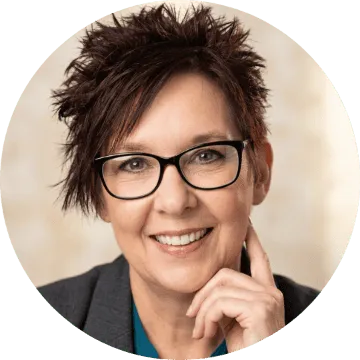
LoyAnn Sherwood is the CEO and Founder of AppLuxe. She spent approximately 25 years in the healthcare industry before transitioning to digital entrepreneurship. Sherwood founded AppLuxe in 2026 after acquiring the domain and identifying an opportunity to build a luxury-positioned app and software marketplace. She manages the platform's editorial direction and business development strategy.
Get first access to exclusive software reviews, hand-picked SaaS lifetime deals, and digital growth strategies delivered straight to your inbox. No spam, ever—just pure software value to scale your business.
61 subscribers have joined!
If you love lifetime SaaS deals as much as I do, then please subscribe to our monthly/weekly AppLuxe newsletter.
Marcus Vance, SaaS Specialist