Discover expert articles on AI, SaaS, software, marketing, SEO, affiliate marketing and startup growth.
Discover expert articles on AI, SaaS, software, marketing, SEO, affiliate marketing and startup growth.
By LoyAnn Sherwood
Published on May 18, 2026
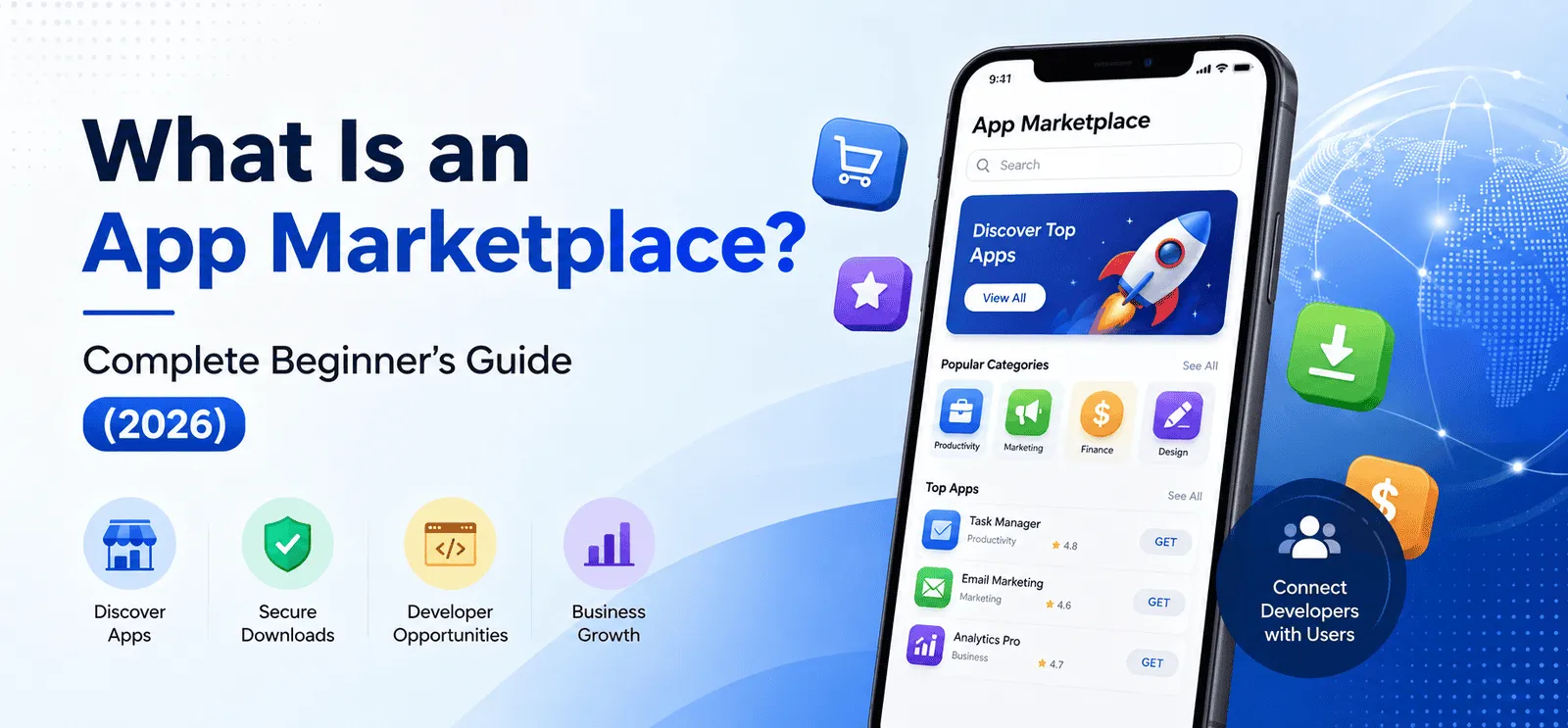
Explore app marketplaces: definitions, types, and how to choose the right one in this essential 2026 beginner’s guide.
Billions of people use apps daily for talking, shopping, banking, engaging with entertainment content, working and learning. Businesses also rely on software to ensure smooth operations, automation of different tasks an ability to keep in contact with customers. Yet, the big question for most people is:
It may sound simple, but app marketplaces upended the entire digital economy. Whether to mobile apps on smartphones, or business tools through SaaS, these marketplaces connect developers with users.
Mobile apps are serious money — all over $935 billion across the globe, by Statista and Sensor Tower. A huge part of that boom? App stores came onto the scene, making it simpler than ever for people to discover, download and manage apps in one place.
From Apple Inc to Google, from Shopify to Salesforce — Now a days the biggest apps ecosystems are run my companys
Now, today, Apple Inc., Google, Shopify, and Salesforce are the ones with some of the largest app ecosystems in history.
Here’s what we’ll cover:
What an app marketplace is
How app marketplaces work
Different types of app marketplaces
Benefits and challenges
Real-world examples
Future trends shaping the industry
No matter if you are a business owner, developer or marketer — or simply beginning — this guide has you covered.
An app marketplace is a digital platform where users can discover, download, purchase, and manage software applications. It connects app developers with users looking for tools, services, or entertainment.
Think of an app marketplace like Amazon, but instead of buying products, you’re browsing and downloading software.
Instead of physical products, users browse digital apps.
Developers publish their apps, and users browse to find what works for them. The marketplace takes care of everything in between — listings, payments, reviews, updates, and downloads, all in one place.
For example:
Before app stores existed, you had to hunt down apps on individual websites, hope they were safe, and install everything manually. It was slow, risky, and frustrating.
That’s exactly why app marketplaces have become such a big deal today.
Before app marketplaces became mainstream, software distribution was decentralized.
Before app stores, downloading software meant digging through random websites and hoping for the best. Fake installers, security vulnerabilities, and compatibility headaches were common. Developers had it rough too — with no central place to showcase their work, getting discovered was a real challenge.
Both sides were frustrated. Users wanted a source they could actually trust. Developers wanted a way to reach people and earn from their work.
Then smartphone adoption took off around 2008, and the problem got urgent fast. Millions of new users needed a simple, safe way to install apps on their phones. That demand is what pushed the modern app marketplace into existence — and it hasn’t looked back since.
App marketplaces solved the chaos by giving everyone a single, trusted place to go.
Users got a clean, secure experience — verified apps, honest ratings, easy categories, and built-in payments. No more sketchy downloads. Developers got instant access to massive audiences without having to build their own distribution from scratch.
The impact was immediate. When Apple launched the App Store in 2008, it had just 500 apps. Within a few years, downloads were in the billions. Today, millions of apps compete across iOS, Android, desktop, gaming, and SaaS platforms — and that number keeps climbing.
Behind the scenes, app marketplaces are more complex than they appear. A lot has to happen before an app lands on your phone.
Here’s how it typically works:
It starts with the developer. Once an app is built, they upload it to the marketplace along with all the key details — description, screenshots, category, and pricing.
The submission usually includes:
This is basically everything you read before deciding whether to hit that download button.
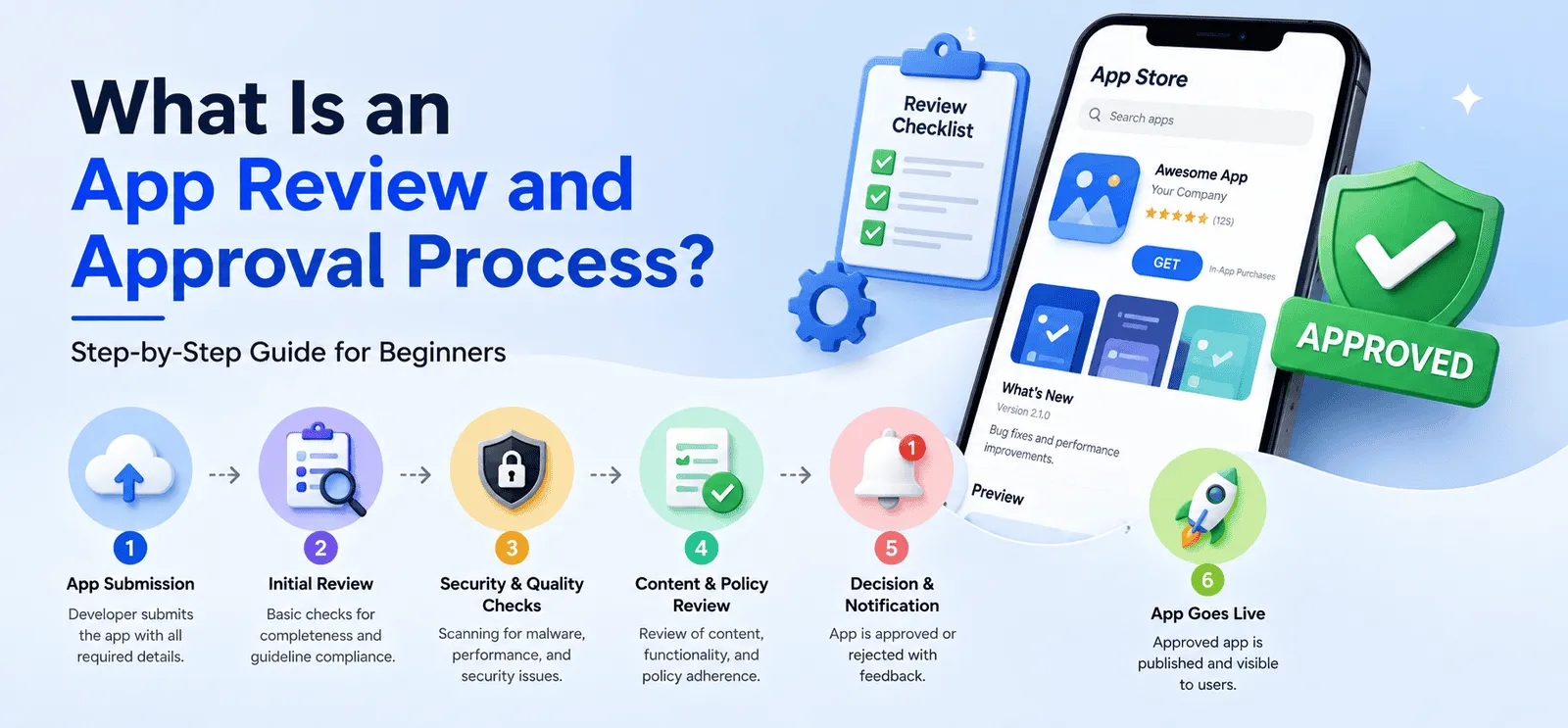
Most app marketplaces review submissions before publishing them.
The goal is simple: keep the platform safe and trustworthy.
For example:
This is what keeps malware and low-quality apps from slipping through. That said, it’s not always a smooth ride for developers — apps can get delayed or rejected if they don’t meet the platform’s guidelines, which can be a frustrating part of the process.
Once approved, apps become searchable inside the marketplace.
Users can discover apps through:
This is where App Store Optimization — or ASO — comes in.
Apps with better keywords, ratings, and engagement often rank higher.
Users can install apps directly from the marketplace with one click.
The marketplace also handles:
It’s a much smoother experience than hunting down and installing software on your own.
App marketplaces make money through several methods:
For example, many marketplaces charge developers a percentage of revenue generated through app sales.
This model has quietly become one of the biggest money-makers in the tech industry.
This model has quietly become one of the biggest revenue engines in the entire tech industry.
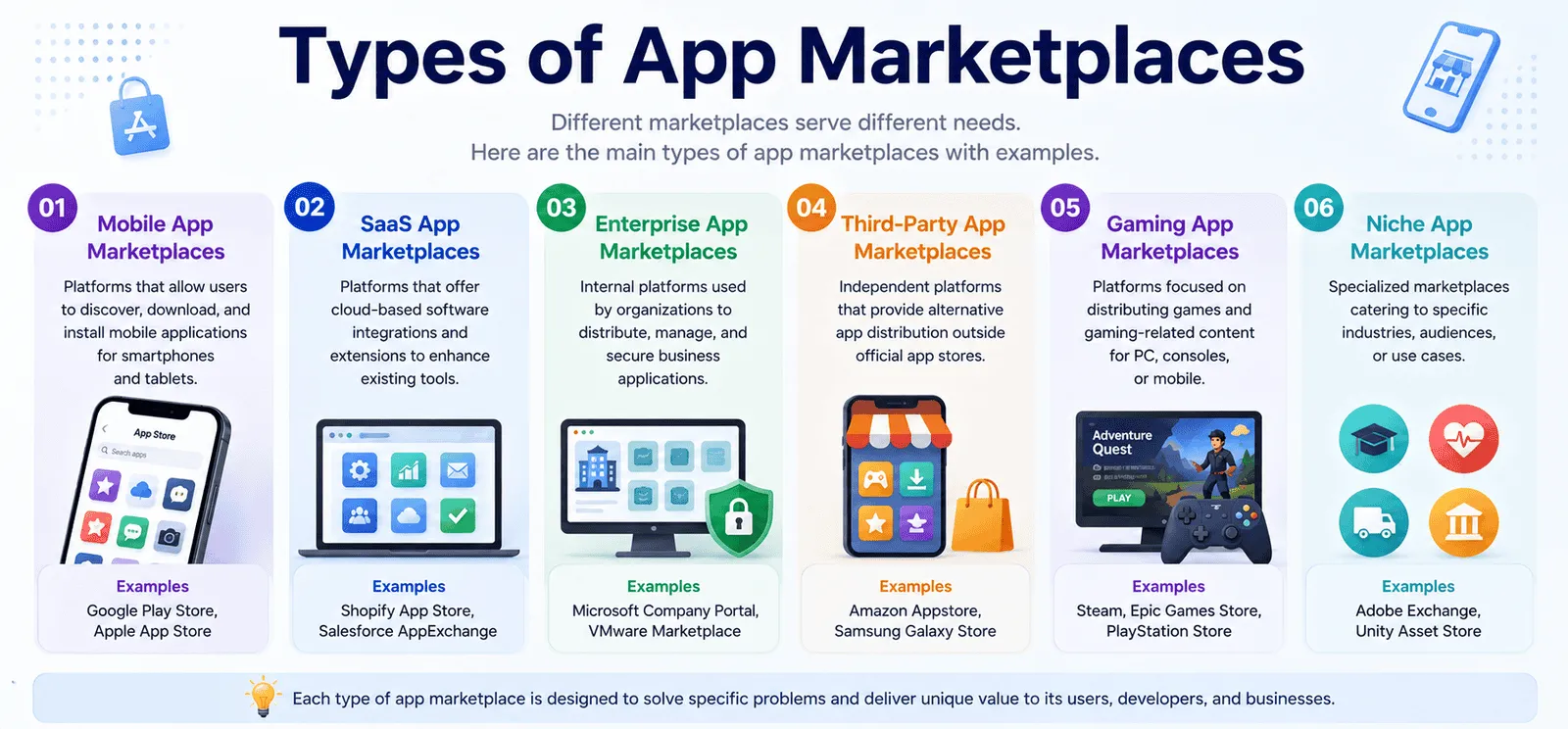
Not all app marketplaces are built the same. Different platforms cater to different audiences and serve various goals. Here’s a breakdown of the main types:
These are the ones most people are familiar with — platforms built for smartphone and tablet apps. The two biggest names are the Google Play Store and the Apple App Store.
Mobile marketplaces dominate global downloads for one simple reason: billions of people use smartphones every day. With Android holding a commanding share of the global smartphone market, Google Play stands as one of the largest app distribution channels worldwide.
SaaS marketplaces focus on cloud-based business software integrations.
Instead of mobile apps, these marketplaces offer tools that improve workflows, automation, and productivity.
Examples:
For example, ecommerce businesses use Shopify apps for:
This lets third-party developers build on top of existing platforms and add new capabilities.
Large companies often build private app marketplaces for internal use.
Employees can securely install approved business tools without accessing public platforms.
Benefits include:
Many companies use these to manage apps across remote teams.
These marketplaces operate independently from official platform owners.
Examples:
Third-party marketplaces can be a useful alternative for developers who want more flexibility outside the major platforms. Just keep in mind — if you’re downloading from one, it’s worth doing a quick check to make sure the source is legitimate, and the app is safe.
Gaming marketplaces focus on PC, console, and cloud gaming applications.
Examples:
These platforms are the go-to for games, updates, downloadable content, and everything that keeps gaming communities alive.
Gaming marketplaces generate billions of dollars annually due to the growth of online gaming.
Operated by Google, the Google Play Store is the primary marketplace for Android applications.
It offers:
Its massive global reach makes it one of the most competitive app ecosystems out there.
Apple Inc. App Store focuses on iOS devices.
Although smaller than Android in market share, iOS users often generate higher app spending.
That makes it a go-to for developers who want to reach users willing to spend money.
The Shopify App Store helps merchants extend their online stores.
Popular categories include:
This marketplace plays a major role in the e-commerce ecosystem.
Salesforce AppExchange allows businesses to install CRM extensions and workflow tools.
It supports enterprise automation and business integrations.
Thousands of businesses run on it every single day.
Operated by Microsoft, the Microsoft Store distributes Windows applications, software, and games.
It works for everyday users and large businesses alike.
Get first access to exclusive software reviews, hand-picked SaaS lifetime deals, and digital growth strategies delivered straight to your inbox. No spam, ever—just pure software value to scale your business.
60 subscribers have joined!
If you love lifetime SaaS deals as much as I do, then please subscribe to our monthly/weekly AppLuxe newsletter.
Marcus Vance, SaaS Specialist
It works for casual users and large enterprises alike.
App marketplaces make life easier for everyone involved — users, developers, and businesses.
Easy App Discovery
Finding a new app is simple. Just search, browse by category, or check out what’s being recommended.
Secure Downloads
Most marketplaces scan apps for threats before they ever reach you, so you’re not taking a gamble every time you hit download.
Ratings and Reviews
Real feedback from real users helps you figure out what’s worth your time — and what to avoid.
Automatic Updates
Your apps stay current without you lifting a finger, which means better performance and fewer security gaps.
Developers get instant access to millions of potential users around the world — no need to build an audience from scratch.
Marketplaces also take the complexity out of making money. They simplify:
Featured sections and rankings give apps a real chance to get noticed without a massive marketing budget.
Analytics and Insights
Most marketplaces give developers access to performance data — things like download numbers, user behavior, and engagement trends. That kind of insight makes it much easier to improve the app over time and give users what they actually want.
Benefits for Businesses
For businesses, app marketplaces aren’t just a distribution channel — they’re a way to run smoother operations and deliver a better experience to customers.
For example:
Instead of building from scratch, businesses can find and install ready-made solutions in minutes.
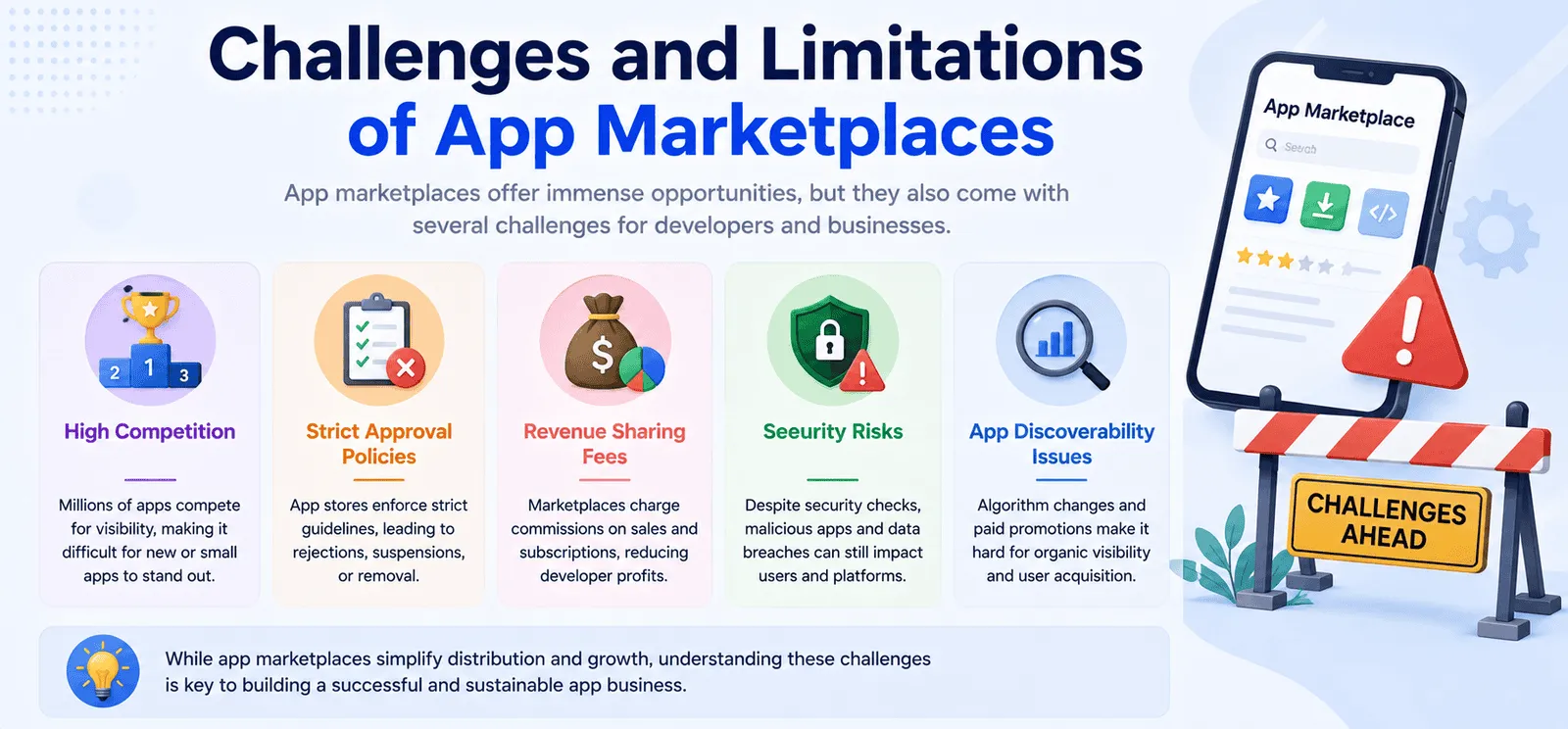
Challenges and Limitations of App Marketplaces
Of course, app marketplaces aren’t without their downsides.
High Competition
With millions of apps fighting for attention, standing out is genuinely tough — especially for smaller developers. Studies show that a large chunk of apps barely get downloaded at all, simply because they never rank well enough to be seen.
Strict Policies
The major platforms play by their own rules, and those rules can be unforgiving. Apps can get rejected, suspended, or even permanently banned for policy violations. And since guidelines can change with little warning, developers have to stay on their toes just to keep their apps live.
Revenue Sharing Fees
Most marketplaces take a cut of every purchase and subscription made through their platform. For developers, that directly eats into their margins. It’s become such a sore point that it’s sparked high-profile legal battles between major tech companies and the app publishers who depend on them.
Security Risks
Although marketplaces improve safety, fake apps and digital thieves still appear occasionally.
Users need to be careful about what they download and where it comes from.
Dependency on Platforms
Many developers build their entire business around a single marketplace. That’s a risky position to be in. If the platform changes its policies, tweaks its algorithm, or drops your rankings, your revenue can take a serious hit overnight. It’s one of the quieter but very real risks of operating in someone else’s ecosystem.
App Marketplace vs. App Store: What’s the Difference?
People use these terms interchangeably all the time, but there is a subtle difference worth knowing.
An app store usually refers to a specific branded platform tied to one ecosystem — think the Apple App Store or Google Play Store.
An app marketplace is a broader concept. It includes mobile app stores, but also SaaS ecosystems, enterprise software platforms, and gaming distribution channels.
The simplest way to think about it: every app store is a marketplace, but not every marketplace is limited to mobile apps.
How Developers Optimize Apps for App Marketplaces
Getting your app published is just the beginning. If nobody can find it, it doesn’t matter how good it is. Here’s how developers work to stay visible:
App Store Optimization (ASO)
ASO is essentially SEO, but for app stores. Developers fine-tune their app titles, keywords, descriptions, and metadata to rank higher in search results — the same way websites compete on Google.
Visual Optimization
First impressions matter, and users decide fast. A strong app icon, clean screenshots, and a compelling demo video can be the difference between a download and a scroll-past.
Ratings and Reviews
Good reviews build trust and improve rankings. Most savvy developers actively encourage happy users to leave feedback — because a steady stream of positive reviews signals credibility to both the algorithm and new users.
Performance Improvements
A buggy or slow app doesn’t just frustrate users — it hurts your rankings too. Regular updates, crash fixes, and performance improvements are essential for staying competitive and keeping users around.
The Shopify App Store is a great example of how a marketplace can grow into something much bigger than a simple download platform.
Shopify merchants often need more than what the core platform offers — things like SEO tools, email marketing, inventory management, loyalty programs, and analytics. Rather than building all of that in-house, Shopify opened the door to third-party developers who could create and sell those tools directly to merchants.
The result? Everyone benefits. Merchants get the tools they need in minutes. Developers earn recurring subscription revenue. And Shopify builds a stickier, more valuable platform that keeps merchants coming back.
According to public reports, this ecosystem contributes billions in value to Shopify merchants through apps and integrations alone. It’s a clear example of how an app marketplace can evolve into an entire business economy.
The industry is moving fast. Here are the trends worth paying attention to:
AI-Powered Recommendations
Marketplaces are getting smarter. AI now personalizes app recommendations based on your behavior, interests, and purchase history — making discovery feel less like searching and more like the right app finding you.
Growth of SaaS Ecosystems
As more businesses move to cloud-based tools, software marketplaces are expanding rapidly. The most valuable platforms aren’t just selling standalone apps anymore — they’re building interconnected ecosystems where everything works together.
Cross-Platform Experiences
Users expect their apps to work everywhere — phone, desktop, web, smart devices. Future marketplaces will need to support that kind of seamless, unified experience across all screens.
Blockchain and Decentralized Platforms
Some companies are experimenting with decentralized marketplaces built on blockchain — the idea being to reduce dependence on big platforms and cut down on transaction fees. It’s an interesting space, but mainstream adoption is still a long way off.
An app marketplace is a platform where users can discover, download, and manage software applications.
An app store mainly refers to mobile app distribution, while app marketplace is a broader term that includes SaaS, gaming, and enterprise ecosystems.
The Google Play Store is considered one of the largest app marketplaces due to Android’s global reach.
Most major app marketplaces use security reviews and digital thief scanning, but users should still verify downloads carefully.
How do app marketplaces make money?
They generate revenue through commissions, subscriptions, advertising, and paid app purchases.
Yes. Many enterprises build internal or customer-focused marketplaces for software distribution and integrations.
App marketplaces have changed the way software is found, shared, and built into a business.
Instead of hunting down apps on random websites, people now turn to trusted platforms that make the whole experience easier and safer. Developers get access to a global audience. Businesses get tools that actually get adopted. Everyone wins.
And it’s not just mobile apps — from SaaS tools and games to enterprise software, marketplaces now touch almost every corner of the digital world.
As AI, cloud tech, and cross-platform apps keep evolving, marketplaces are only going to become more central to how we work and live. If you’re a developer or business owner, understanding how they work isn’t just useful anymore — it’s becoming essential.


LoyAnn Sherwood is the CEO and Founder of AppLuxe. She spent approximately 25 years in the healthcare industry before transitioning to digital entrepreneurship. Sherwood founded AppLuxe in 2026 after acquiring the domain and identifying an opportunity to build a luxury-positioned app and software marketplace. She manages the platform's editorial direction and business development strategy.
Get first access to exclusive software reviews, hand-picked SaaS lifetime deals, and digital growth strategies delivered straight to your inbox. No spam, ever—just pure software value to scale your business.
60 subscribers have joined!
If you love lifetime SaaS deals as much as I do, then please subscribe to our monthly/weekly AppLuxe newsletter.
Marcus Vance, SaaS Specialist