Discover expert articles on AI, SaaS, software, marketing, SEO, affiliate marketing and startup growth.
Discover expert articles on AI, SaaS, software, marketing, SEO, affiliate marketing and startup growth.
By LoyAnn Sherwood
Published on Mar 3, 2026
The Software as a Service (SaaS) industry has completely transformed how businesses operate. From project management tools to AI writing assistants, companies no longer buy software once—they subscribe. And that subscription model creates one of the most powerful wealth-building opportunities of the modern digital economy.
If you’ve ever wondered how people build SaaS startups that generate $10,000, $100,000, or even millions per month in recurring revenue, this in-depth guide will walk you through exactly how to make money selling SaaS products—even if you’re starting from scratch.
This is not hype. This is strategy.
Let’s dive in.
SaaS stands for Software as a Service. Instead of selling software as a one-time purchase, you sell access to software on a subscription basis—usually monthly or annually.
Popular examples include:
Customers pay recurring fees for access. That recurring revenue is what makes SaaS so powerful.
Before we talk about how to make money, you need to understand why SaaS is so attractive.
Instead of chasing one-time sales, you build predictable monthly income.
After development costs, software can scale to thousands of users with relatively low incremental costs.
You can sell worldwide without physical inventory.
SaaS companies often sell for 5x–15x annual revenue.
Customer onboarding, billing, and upgrades can be automated.
There isn’t just one way to profit from SaaS. Let’s explore the most effective models.
This is the classic route.
You:
Tools like Dropbox started by solving a simple file-sharing problem.
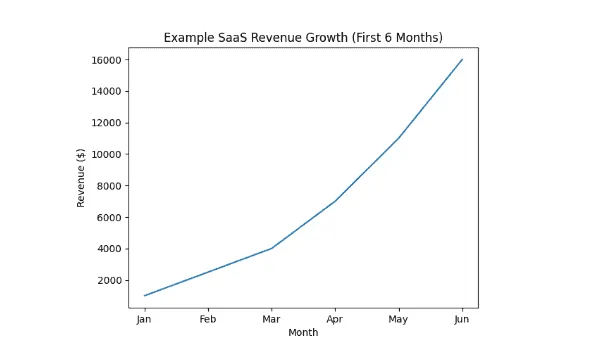
Small SaaS: $5K–$50K/month
Mid-size SaaS: $100K+/month
Enterprise SaaS: Millions/month
You don’t need to build software.
White-label SaaS allows you to:
This is popular in:
If software costs you $30/month and you sell for $97/month, you keep $67/month per client.
Scale to 200 clients = $13,400/month.
Affiliate marketing in SaaS is massive.
Companies like:
Pay recurring commissions (20–40%).
Refer 100 customers paying $100/month
30% commission = $30/month per user
100 users = $3,000/month recurring
This compounds over time.
Agencies make huge money bundling SaaS with services.
Example:
Instead of charging $49/month, you charge $1,500/month.
This is how digital agencies scale quickly.
Micro-SaaS is small, focused software solving one problem well.
Examples:
These can:
Instead of fixed monthly fees, charge per usage.
Examples:
This model is popular among AI companies.
Instead of 1,000 small customers, sell 10 big customers.
Enterprise contracts:
Even 20 enterprise clients at $50K/year = $1M/year.
Let’s break this down practically.
The best SaaS businesses solve painful problems.
Ask:
Look at:
Pain equals profit.
Get first access to exclusive software reviews, hand-picked SaaS lifetime deals, and digital growth strategies delivered straight to your inbox. No spam, ever—just pure software value to scale your business.
60 subscribers have joined!
If you love lifetime SaaS deals as much as I do, then please subscribe to our monthly/weekly AppLuxe newsletter.
Marcus Vance, SaaS Specialist
Never build first.
Validate by:
If people don’t sign up, pivot.
Don’t overbuild.
MVP = Core function only.
Use:
Focus on solving one problem extremely well.
SaaS pricing determines profit.
Rule of thumb:
If customers don’t hesitate slightly, you’re too cheap.
Traffic is oxygen.
SaaS is won through distribution.
If you don’t track numbers, you won’t scale.
Your monthly subscription income.
How much it costs to acquire a customer.
Total revenue per customer.
Percentage of customers who cancel.
Healthy SaaS formula:
LTV should be at least 3x CAC.
Let’s be realistic.
$0–$5,000/month
$10,000–$100,000/month
$250,000+/month
But this depends on:
Avoid these and your odds improve drastically.
Write content targeting:
Long-tail keywords convert better.
Look at how companies like Ahrefs dominate SEO with educational content.
Build trust first. Sell later.
Let the product sell itself.
Examples:
Think about how Notion grew organically.
Create:
Customers stay longer when they feel connected.
High-ticket SaaS often requires:
You can also:
Marketplaces exist where SaaS startups are sold for 2–4x annual profit.
Honest answer:
12–36 months for meaningful revenue.
SaaS is not a get-rich-quick scheme.
It’s a build-assets-and-scale game.
Here’s your roadmap:
Repeat.
| Factor | SaaS | Ecommerce | Agency |
| Recurring Revenue | Yes | No | Sometimes |
| Scalability | High | Medium | Low |
| Profit Margins | High | Medium | High |
| Startup Cost | Medium | Medium | Low |
| Exit Valuation | Very High | Medium | Low |
SaaS wins in:
Absolutely.
With AI, automation, and digital transformation accelerating, demand for smart software tools is growing.
The opportunity isn’t gone.
It’s evolving.
Month 1–2:
Month 3–4:
Month 5–6:
Month 6+:
Making money selling SaaS products is one of the most powerful business models available today.
It offers:
But it rewards patience, strategy, and execution—not shortcuts.
If you’re serious about building long-term wealth, SaaS is worth your attention.
Start small. Think big. Execute consistently.
And remember:
The real money isn’t in launching software.
It’s in solving real problems repeatedly.
[rafflepress id=”1″]

LoyAnn Sherwood is the CEO and Founder of AppLuxe. She spent approximately 25 years in the healthcare industry before transitioning to digital entrepreneurship. Sherwood founded AppLuxe in 2026 after acquiring the domain and identifying an opportunity to build a luxury-positioned app and software marketplace. She manages the platform's editorial direction and business development strategy.
Get first access to exclusive software reviews, hand-picked SaaS lifetime deals, and digital growth strategies delivered straight to your inbox. No spam, ever—just pure software value to scale your business.
60 subscribers have joined!
If you love lifetime SaaS deals as much as I do, then please subscribe to our monthly/weekly AppLuxe newsletter.
Marcus Vance, SaaS Specialist