Discover expert articles on AI, SaaS, software, marketing, SEO, affiliate marketing and startup growth.
Discover expert articles on AI, SaaS, software, marketing, SEO, affiliate marketing and startup growth.
By LoyAnn Sherwood
Published on Apr 28, 2026

So, you want to get your website seen, right? The key to that is Search Engine Optimization, or SEO. Simply put, SEO is about making your website as attractive as possible to search engines like Google, so when someone searches for something you offer, your site shows up higher in the results. It’s not magic, but a consistent, strategic effort that pays off in increased visibility and, ultimately, more traffic and potential business.
Before diving into specific tactics, it’s helpful to understand the basic lay of the land. Search engines are constantly evolving, but their core goal remains the same: to provide users with the most relevant and high-quality information possible. This means your SEO efforts should always align with that goal.
Think of a search engine as a super-smart librarian. When you ask it a question, it sifts through billions of books (websites) to find the best answer. It uses various “ranking factors” to determine which books are most relevant and trustworthy. These factors include things like the words on your page, how well your site is built, how fast it loads, and whether other reputable sites link to yours. It’s a complex algorithm, but understanding these fundamental principles helps you make informed decisions.
In today’s digital world, if you’re not visible online, you’re practically invisible. Most people use search engines to find products, services, and information. If your website isn’t ranking well, you’re missing out on a massive audience. Good SEO translates directly to more organic traffic, which can lead to more leads, sales, and brand recognition – all without paying for ads. It’s a long-term investment that yields significant returns.
In the ever-evolving landscape of digital marketing, implementing effective SEO strategies is crucial for enhancing online visibility and driving traffic to your website. For those looking to maximize their blogging potential, a related article offers valuable insights and actionable tips. You can read more about these strategies in the article titled “Maximizing Your Blogging Potential: Tips for Success” available at this link. This resource provides essential guidance on optimizing your content to achieve better search engine rankings and engage your audience effectively.
Content isn’t just king; it’s the entire kingdom when it comes to SEO. High-quality, relevant content is the magnet that attracts both users and search engines.
Before you write a single word, you need to know what words your target audience is actually using to search. This is where keyword research comes in. It’s about identifying the terms and phrases people type into search engines that are relevant to your business.
Start by brainstorming. What questions do your customers ask? What problems do you solve? Use tools like Google Keyword Planner, Ahrefs, SEMrush, or even Google’s “People Also Ask” section and related searches to uncover popular keywords and long-tail keywords (more specific, longer phrases that still get decent search volume). Don’t just go for the most popular terms; consider their relevance to your content and the competition for those keywords. Sometimes, targeting less competitive but highly relevant long-tail keywords can bring better results faster.
Keywords aren’t just about the words themselves; they’re about the intent behind those words. Is the user looking for information (informational intent), trying to buy something (commercial intent), or looking for a specific website (navigational intent)? Tailor your content to match that intent. For example, if someone searches “best running shoes,” they’re likely in the commercial intent phase, so a product comparison or review article would be appropriate. If they search “how to tie running shoes,” an instructional blog post is better.
Once you have your keywords, it’s time to create content that genuinely helps and engages your audience. This isn’t about stuffing keywords into every sentence; it’s about naturally incorporating them into valuable information.
Your content should directly address the questions and needs of your target audience. Provide comprehensive, accurate, and easy-to-understand information. If your content genuinely solves a problem or provides useful insights, users will spend more time on your page, share it, and return to your site – all positive signals for search engines. Think about what a user searching for your chosen keywords really wants to know, and then provide that answer, and then some.
Even the most brilliant content won’t get read if it’s a giant wall of text. Break up your content with headings, subheadings, bullet points, and images. This not only makes it easier to read on any device but also helps search engines understand the structure and main topics of your page. Use an engaging writing style, conversational language, and avoid jargon where possible. Keep paragraphs short and to the point, especially for mobile users who are often scanning.
Beyond the main text, several other elements on your page need attention for SEO. These “on-page” elements help search engines understand what your page is about.
These are often the first things a user sees in search results. Your title tag should be compelling, accurately describe the page’s content, and include your primary keyword (preferably at the beginning). Keep it under 60 characters to avoid truncation. Your meta description, while not a direct ranking factor, influences click-through rates. It should be a concise, persuasive summary of your page, also incorporating relevant keywords, and typically under 160 characters. Think of it as a mini-advertisement for your page.
Header tags not only improve readability for users but also signal to search engines the hierarchy and main topics of your content. Use one H1 tag per page for your main title. Use H2s for major sections and H3s for sub-sections within those. Naturally include relevant keywords in your header tags where appropriate, but don’t force it. They should guide the reader through your content logically.
Images can tremendously slow down your website if not optimized, and speed is a significant ranking factor. Optimize images by compressing them to reduce file size without sacrificing quality. Use descriptive file names (e.g., “blue-running-shoes.jpg” instead of “IMG001.jpg”). Most importantly, use “alt text” for every image. Alt text describes the image for visually impaired users and for search engines that can’t “see” the image. Include relevant keywords in your alt text, but keep it accurate and descriptive.
While content is crucial, your website’s underlying technical health plays a huge role in its ability to rank. This is where technical SEO comes in.
Nobody likes a slow website. Search engines certainly don’t, and neither do your users. A slow site leads to higher bounce rates and impacts rankings.
Google has explicitly stated that page speed is a ranking factor. Users expect websites to load quickly, and if yours doesn’t, they’ll likely go elsewhere. This negative user experience translates to poor SEO performance. Faster sites tend to have lower bounce rates and higher conversion rates.
Use tools like Google PageSpeed Insights, GTmetrix, or Pingdom to analyze your site’s speed and get actionable recommendations. Common culprits for slow sites include large image files, unoptimized code (CSS, JavaScript), poor hosting, and too many plugins. Tactics for improvement include image compression, browser caching, minifying CSS and JavaScript files, using a Content Delivery Network (CDN), and choosing a reliable web host.
With the majority of internet users now browsing on mobile devices, having a mobile-friendly website is no longer optional; it’s a necessity. Google implements “mobile-first indexing,” meaning they primarily use the mobile version of your content for indexing and ranking.
A responsive website adapts its layout and content to fit the screen size of the device being used, whether it’s a desktop, tablet, or smartphone. This ensures a consistent and optimal user experience across all devices. Without it, mobile users will struggle to navigate your site, which will lead them to leave and signal to search engines that your site isn’t user-friendly.
Google provides a Mobile-Friendly Test tool where you can quickly check if your site passes their mobile usability criteria. Pay attention to issues like text being too small to read, clickable elements being too close together, and content not fitting the screen. Addressing these issues is paramount for good mobile SEO.
How your website is structured impacts both user experience and how easily search engine crawlers can understand and index your content.
Organize your content in a clear, hierarchical manner. Think of it like an inverted pyramid: your homepage at the top, then main categories, then subcategories, and finally individual pages or products. This logical structure makes it easy for users to find what they’re looking for and helps search engines understand the relationships between your pages. A shallow and wide structure (fewer clicks to important pages) is generally preferred.
Your website’s menu should be easy to find and understand. Use clear, descriptive labels for your menu items. Ensure that users can always find their way back to the homepage or other main sections. Implementing breadcrumbs (e.g., Home > Category > Subcategory > Current Page) also helps with navigation and signals content hierarchy to search engines.
These less visible but crucial files help search engines crawl and understand your website more efficiently.
An XML sitemap is essentially a map of your website, listing all the important pages and telling search engines where to find them. It’s especially useful for new websites, large sites with many pages, or sites with pages that aren’t well linked internally. It doesn’t guarantee indexing, but it helps search engine crawlers discover and prioritize your content. Submit your sitemap to Google Search Console.
The robots.txt file tells search engine crawlers which parts of your website they are allowed or not allowed to access. You might use it to prevent crawlers from indexing less important pages, staging sites, or private areas. Be careful with this file, as a mistake can prevent search engines from indexing your entire site. It’s not a security measure, but rather a directive for polite crawlers.
Sure, here is the sentence with the clickable link:
I found the perfect app for my needs on the AppLuxe℠ App Marketplace.
Get first access to exclusive software reviews, hand-picked SaaS lifetime deals, and digital growth strategies delivered straight to your inbox. No spam, ever—just pure software value to scale your business.
60 subscribers have joined!
If you love lifetime SaaS deals as much as I do, then please subscribe to our monthly/weekly AppLuxe newsletter.
Marcus Vance, SaaS Specialist
Even with fantastic content and a technically sound site, you need to build authority to truly rank well. This is where off-page SEO comes in – activities that happen outside your website to boost its credibility.
Backlinks are links from other websites to yours. They are a powerful signal to search engines that your content is valuable, trustworthy, and authoritative. Think of them as a vote of confidence.
Not all backlinks are created equal. A link from a highly reputable, relevant website carries much more weight than a link from a low-quality, spammy site. Focus on earning links from domains that are authoritative in your industry and have content relevant to yours. A few high-quality backlinks are far more valuable than dozens of low-quality ones.
Don’t buy links or engage in spammy link schemes, as this can lead to penalties from Google. Instead, focus on legitimate strategies:
While social media shares and likes aren’t direct ranking factors, they do play an indirect role in SEO. Increased exposure on social media can lead to more people discovering your content, which can then result in more backlinks and mentions on other websites.
A viral social media post can drive a huge surge of traffic to your site. This traffic can lead to people sharing your content, linking to it, and ultimately expanding its reach. Social media also helps build brand awareness and trust, which are foundational elements of a strong online presence. Active social media profiles provide another opportunity for your brand to be seen and for people to engage with your content.
Be active on the social platforms where your target audience spends their time. Share your content, engage in conversations, and build a community. The more people who see and interact with your brand, the more opportunities there are for organic mentions and links.
In the ever-evolving world of digital marketing, staying updated on the latest SEO strategies is crucial for businesses looking to enhance their online presence. One insightful resource that delves into effective techniques for optimizing website visibility is an article that explores various approaches to search engine optimization. By implementing these strategies, companies can improve their rankings and attract more organic traffic. For a deeper understanding of these methods, you can check out this informative piece on SEO strategies at Appluxe.
| SEO Strategies | Metrics |
|---|---|
| Keyword Research | Search Volume, Competition, Relevance |
| On-Page Optimization | Meta Tags, Content Quality, Internal Linking |
| Link Building | Backlinks, Domain Authority, Anchor Text |
| Technical SEO | Site Speed, Mobile Friendliness, Site Structure |
| Content Marketing | Engagement, Shares, Traffic |
If you have a physical location or serve a specific geographic area, local SEO is absolutely critical. It helps customers in your vicinity find you.
This is arguably the most important local SEO tool. Your Google Business Profile (formerly Google My Business) is your free listing on Google Search and Maps.
Fill out every section of your Google Business Profile completely and accurately. This includes your business name, address, phone number (NAP), website, hours of operation, categories, services, and photos. Use relevant keywords naturally in your business description. Regularly update your profile with posts about offers, events, or news. Inaccurate or incomplete information can hinder your local visibility.
Reviews are incredibly powerful for local SEO. They build trust with potential customers and signal to Google that your business is legitimate and valued. Encourage satisfied customers to leave reviews on your Google Business Profile. Respond to all reviews, both positive and negative, professionally and promptly. This shows you value their feedback and are engaged with your customers.
Citations are mentions of your business name, address, and phone number (NAP) on other websites – even without a direct link back to your site. Consistency across these citations is key.
Ensure your business name, address, and phone number are identical across all your online listings (Google Business Profile, Yelp, Yellow Pages, industry-specific directories, etc.). Inconsistencies can confuse search engines and negatively impact your local rankings. Double-check for any variations, even minor ones like abbreviations or different suite numbers.
Submit your business information to relevant local and industry-specific directories. Think Yelp, TripAdvisor (for hospitality), industry associations, and local chamber of commerce websites. These citations help validate your business to search engines and provide additional avenues for potential customers to find you.
SEO isn’t a “set it and forget it” task. The digital landscape is constantly changing, so continuous monitoring and adaptation are crucial for long-term success.
Google Analytics is a free and powerful tool that provides deep insights into your website traffic and user behavior.
By regularly reviewing these metrics, you can identify pages that are underperforming or high-performing pages that could be optimized further. For example, if a page has a high bounce rate, you might need to improve its content, readability, or calls to action. If a page with valuable content isn’t getting much organic traffic, it might need more extensive keyword optimization or backlink efforts.
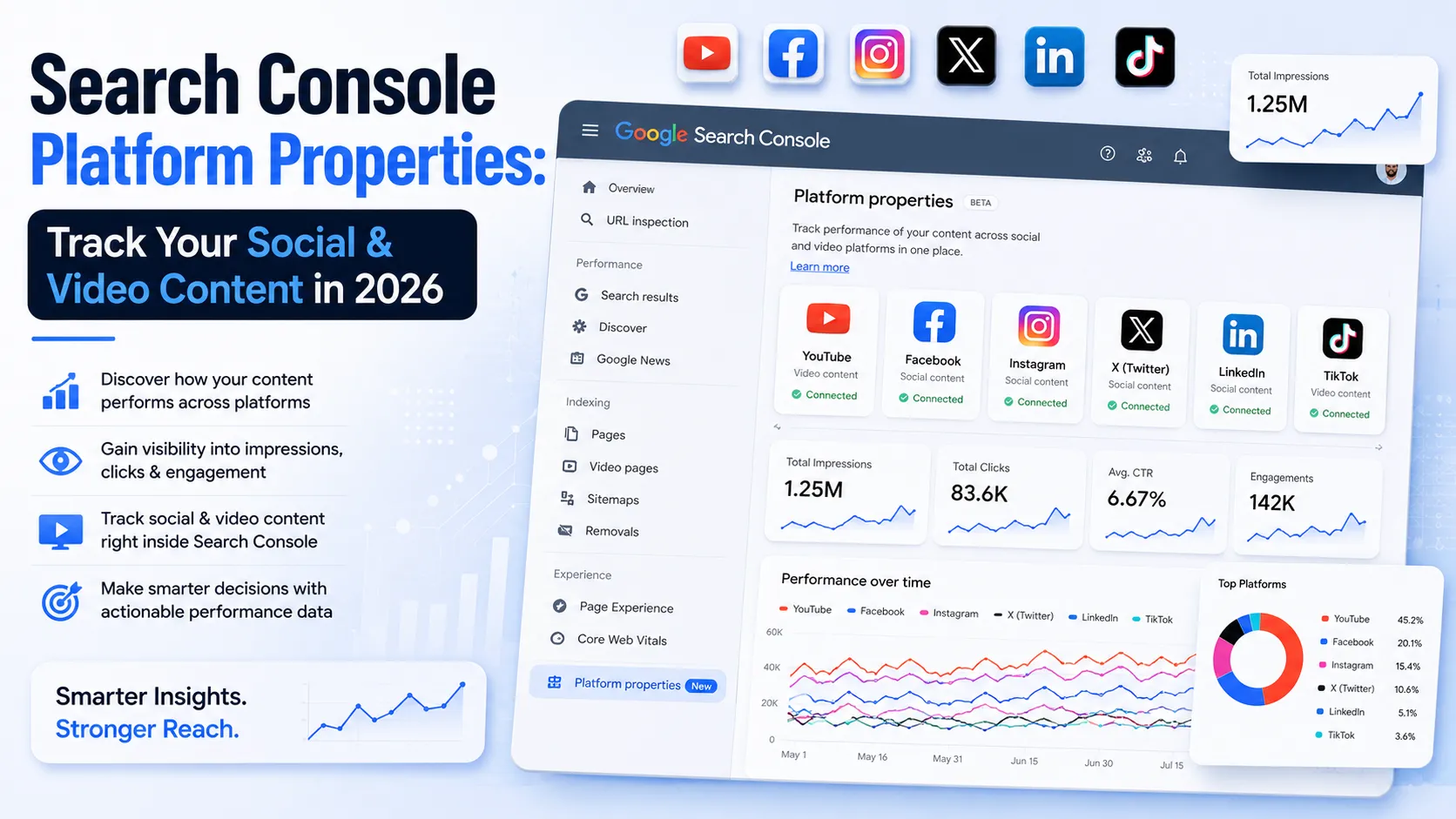
Google Search Console is another indispensable free tool that helps you monitor your website’s presence in Google search results.
Search Console shows you which keywords your site is ranking for, your average position in search results, click-through rates, and impressions. This data is invaluable for understanding how users are finding you and for identifying new keyword opportunities. It can also show you which pages are getting the most visibility.
Search Console alerts you to critical technical issues on your site, such as crawl errors, mobile usability problems, security issues, and manual penalties. Regularly checking these alerts and addressing them promptly is crucial for maintaining your site’s health and SEO performance. It also helps you understand how Google sees your website.
Google’s algorithms are constantly updated, sometimes with minor tweaks and other times with significant core updates. Keeping an eye on these changes is important for adapting your strategy.
Major algorithm updates can significantly impact your search rankings, sometimes dramatically. Understanding what Google is trying to achieve with a particular update (e.g., prioritizing user experience, improving content quality, addressing spam) helps you adjust your SEO efforts accordingly.
Follow reputable SEO news sites (like Search Engine Land, Moz Blog, Ahrefs Blog, SEMrush Blog), industry leaders on social media, and Google’s official announcements. While you don’t need to panic with every minor change, being aware of major shifts helps you proactively manage your SEO strategy. Don’t chase every single update, but understand the broader direction Google is moving in (usually towards delivering better user experience and higher quality results), and align your strategy with that.
By treating SEO as an ongoing journey rather than a one-off task, you’ll be well on your way to boosting your website’s visibility and achieving your online goals. It takes patience and consistent effort, but the payoff in sustainable organic traffic is well worth it.
SEO stands for Search Engine Optimization, which is the practice of increasing the quantity and quality of traffic to your website through organic search engine results.
SEO strategies are important because they help your website rank higher in search engine results, making it more likely for potential customers to find and visit your site.
Some common SEO strategies include keyword research and optimization, creating high-quality content, improving website speed and user experience, and building backlinks from reputable sources.
The time it takes to see results from SEO strategies can vary depending on the competitiveness of your industry and the specific strategies you are implementing. Generally, it can take several months to start seeing significant improvements in search engine rankings.
There are many tools available for implementing SEO strategies, including Google Analytics for tracking website traffic, SEMrush for keyword research, Moz for backlink analysis, and Yoast SEO for optimizing content on WordPress websites.


LoyAnn Sherwood is the CEO and Founder of AppLuxe. She spent approximately 25 years in the healthcare industry before transitioning to digital entrepreneurship. Sherwood founded AppLuxe in 2026 after acquiring the domain and identifying an opportunity to build a luxury-positioned app and software marketplace. She manages the platform's editorial direction and business development strategy.
Get first access to exclusive software reviews, hand-picked SaaS lifetime deals, and digital growth strategies delivered straight to your inbox. No spam, ever—just pure software value to scale your business.
60 subscribers have joined!
If you love lifetime SaaS deals as much as I do, then please subscribe to our monthly/weekly AppLuxe newsletter.
Marcus Vance, SaaS Specialist